

Sample Name:
ZCHEM FSO11
Flower, Inhalable
Date Issued:
01/09/2025
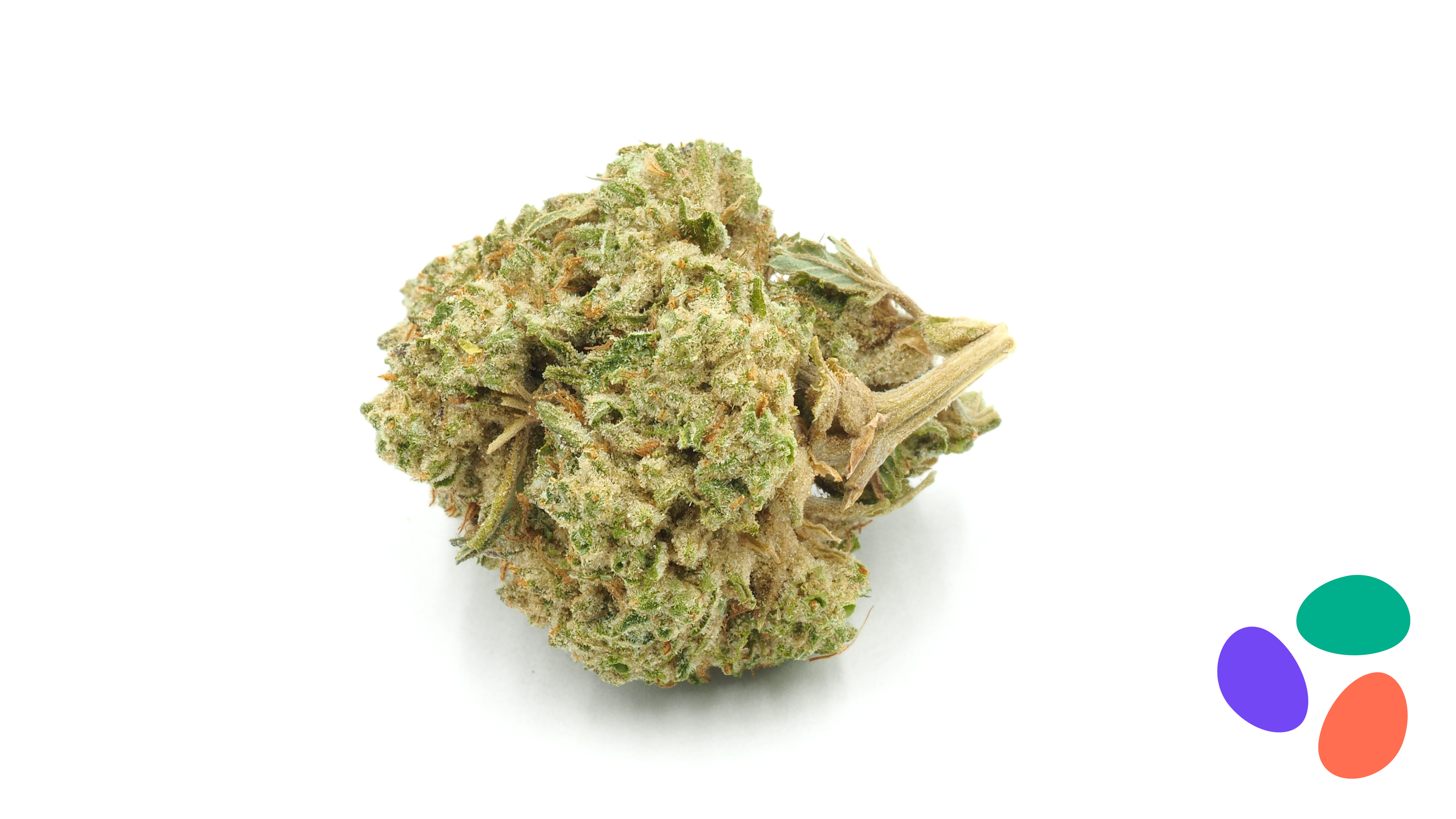
 Hover to Zoom In
Overall Batch Result:
Pass
- β-Caryophyllene 0.7310%
- Limonene 0.3077%
- α-Humulene 0.2574%
Sample Information
Cultivator / Manufacturer
Distributor / Tested For
PhytoFacts® Report


The PhytoFacts chemometric report provides additional cannabinoid and terpenoid details, including dominant terpenes, entourage effects, aroma, flavor, and more.
Share
Easily share a link to this results page with your friends, followers, or business partners.
Sum of Cannabinoids: 25.93%
Total Cannabinoids: 22.84%
Total THC: 22.04%
Total CBD: 0.085%
Moisture:11.1%
Sum of Cannabinoids = Δ9-THC + THCa + CBD + CBDa + CBG + CBGa + THCV + THCVa + CBC + CBCa + CBDV + CBDVa + Δ8-THC + CBL + CBN
Total Cannabinoids = (Δ9-THC+0.877*THCa+Δ8-THC) + (CBD+0.877*CBDa) + (CBG+0.877*CBGa) + (THCV+0.877*THCVa) + (CBC+0.877*CBCa) + (CBDV+0.877*CBDVa) + CBL + CBN
Total THC/CBD is calculated using the following formulas to take into account the loss of a carboxyl group during the decarboxylation step:
Total THC = Δ9-THC + (THCa (0.877)) + Δ8-THC
Total CBD = CBD + (CBDa (0.877))

Dry weight: The weight of a sample after it goes through the drying process.
Pursuant to section § 5724 of California Code of Regulations Title 16 Division 42. Department of Cannabis Control, the equation for moisture correction is: Dry-weight percent cannabinoid = wet-weight percent cannabinoid / (1 − percent moisture / 100)
Sum of Cannabinoids: The concentration of each individual cannabinoid added together as they are, without accounting for decarboxylation. This measurement is of particular importance for certain cannabis products that are not intended to be heated prior to application or consumption.
Total Cannabinoids: The concentration of each acidic cannabinoid, multiplied by 0.877 to account for the loss of molecular mass that happens as it is converted to a neutral cannabinoid when heated. Then this calculated concentration is added to the concentrations of the corresponding neutral cannabinoid already present. This corrected data is of particular importance to both producers and consumers of products intended to be heated prior to application or consumption.
Total Terpenoids: 1.8333%
1
β-Caryophyllene (0.7310%)
2
Limonene (0.3077%)
3
α-Humulene (0.2574%)
Safety Analysis - Summary
Mycotoxins: Pass
Heavy Metals: Pass
Foreign Material: Pass
Water Activity: Pass
View Complete Test Results:

Cannabinoid Analysis
Tested
Show More
Tested by high-performance liquid chromatography with diode-array detection (HPLC-DAD). Calculated using Dry-Weight.
Method: QSP 1157 - Analysis of Cannabinoids by HPLC-DAD
Cannabinoid Test Results
01/09/2025
Result Views
Swipe left on table to see additional columns
| Compound |
LOD/LOQ (mg/g) |
Measurement Uncertainty (mg/g) |
Result (mg/g) |
Result (%) |
|---|---|---|---|---|
| Tetrahydrocannabinolic Acid (THCa) | 0.04 / 0.24 | ±7.787 | 242.59 | 24.259 |
| Δ9 Tetrahydrocannabinol (Δ9THC) | 0.1 / 0.4 | ±0.23 | 7.6 | 0.76 |
| Cannabichromenic Acid (CBCa) | 0.1 / 0.4 | ±0.21 | 3.1 | 0.31 |
| Cannabigerolic Acid (CBGa) | 0.1 / 0.4 | ±0.17 | 3.1 | 0.31 |
| Tetrahydrocannabivarinic Acid (THCVa) | 0.05 / 0.17 | ±0.033 | 1.41 | 0.141 |
| Cannabidiolic Acid (CBDa) | 0.06 / 0.22 | ±0.032 | 0.97 | 0.097 |
| Cannabidivarinic Acid (CBDVa) | 0.02 / 0.22 | ±0.003 | 0.28 | 0.028 |
| Cannabichromene (CBC) | 0.1 / 0.2 | ±0.01 | 0.2 | 0.02 |
| Cannabigerol (CBG) | 0.2 / 0.5 | N/A | <LOQ | <LOQ |
| Cannabidiol (CBD) | 0.1 / 0.3 | N/A | ND | ND |
| Cannabicyclol (CBL) | 0.1 / 0.4 | N/A | ND | ND |
| Cannabinol (CBN) | 0.07 / 0.20 | N/A | ND | ND |
| Cannabidivarin (CBDV) | 0.1 / 0.3 | N/A | ND | ND |
| Tetrahydrocannabivarin (THCV) | 0.07 / 0.21 | N/A | ND | ND |
| ∆8 Tetrahydrocannabinol (Δ8THC) | 0.05 / 0.50 | N/A | ND | ND |
| SUM OF CANNABINOIDS | 259.3 mg/g | 25.93% |
Moisture Test Result
11.1% Tested 01/07/2025 Method: QSP 1224 - Loss on Drying (Moisture)
Learn more
The cannabis plant contains dozens of active compounds called cannabinoids. These compounds are the primary contributors to the psychoactive effects of cannabis.
Cannabinoid testing determines the potency of a sample to aid in dosage considerations.

Terpenoid Analysis
Tested
Show More
Terpene analysis utilizing gas chromatography-flame ionization detection (GC-FID).
Method: QSP 1192 - Analysis of Terpenoids by GC-FID
See a visual representation of this sample's cannabinoid and terpenoid properties, including entourage effects, aroma, and flavor profile.
Terpenoid Test Results
01/09/2025
Result Views
Swipe left on table to see additional columns
| Compound |
LOD/LOQ (mg/g) |
Measurement Uncertainty (mg/g) |
Result (mg/g) |
Result (%) |
|---|---|---|---|---|
| β-Caryophyllene | 0.004 / 0.013 | ±0.3933 | 7.310 | 0.7310 |
| Limonene | 0.005 / 0.016 | ±0.1003 | 3.077 | 0.3077 |
| α-Humulene | 0.009 / 0.180 | ±0.1385 | 2.574 | 0.2574 |
| Myrcene | 0.007 / 0.025 | ±0.0444 | 1.254 | 0.1254 |
| α-Bisabolol | 0.008 / 0.026 | ±0.0328 | 0.762 | 0.0762 |
| Linalool | 0.009 / 0.036 | ±0.0261 | 0.665 | 0.0665 |
| β-Pinene | 0.004 / 0.015 | ±0.0178 | 0.550 | 0.0550 |
| α-Pinene | 0.005 / 0.036 | ±0.0174 | 0.487 | 0.0487 |
| Terpineol | 0.008 / 0.025 | ±0.0193 | 0.316 | 0.0316 |
| Fenchol | 0.009 / 0.036 | ±0.0111 | 0.302 | 0.0302 |
| trans-β-Farnesene | 0.008 / 0.028 | ±0.0164 | 0.288 | 0.0288 |
| Nerolidol | 0.006 / 0.021 | ±0.0187 | 0.236 | 0.0236 |
| β-Ocimene | 0.005 / 0.025 | ±0.0068 | 0.173 | 0.0173 |
| Caryophyllene Oxide | 0.011 / 0.038 | ±0.0074 | 0.124 | 0.0124 |
| Camphene | 0.004 / 0.014 | ±0.0026 | 0.081 | 0.0081 |
| Borneol | 0.004 / 0.014 | ±0.0036 | 0.077 | 0.0077 |
| Eucalyptol | 0.005 / 0.018 | ±0.0011 | 0.028 | 0.0028 |
| Sabinene | 0.004 / 0.014 | ±0.0005 | 0.015 | 0.0015 |
| Pulegone | 0.003 / 0.010 | ±0.0009 | 0.014 | 0.0014 |
| Nerol | 0.003 / 0.036 | N/A | <LOQ | <LOQ |
| Fenchone | 0.008 / 0.036 | N/A | <LOQ | <LOQ |
| Geraniol | 0.002 / 0.036 | N/A | <LOQ | <LOQ |
| Valencene | 0.010 / 0.180 | N/A | <LOQ | <LOQ |
| Citronellol | 0.003 / 0.036 | N/A | <LOQ | <LOQ |
| Terpinolene | 0.008 / 0.036 | N/A | <LOQ | <LOQ |
| Geranyl Acetate | 0.004 / 0.036 | N/A | <LOQ | <LOQ |
| γ-Terpinene | 0.005 / 0.018 | N/A | <LOQ | <LOQ |
| Sabinene Hydrate | 0.007 / 0.036 | N/A | <LOQ | <LOQ |
| Cedrol | 0.009 / 0.032 | N/A | ND | ND |
| Guaiol | 0.011 / 0.035 | N/A | ND | ND |
| Camphor | 0.005 / 0.036 | N/A | ND | ND |
| Menthol | 0.008 / 0.025 | N/A | ND | ND |
| p-Cymene | 0.005 / 0.015 | N/A | ND | ND |
| Isoborneol | 0.003 / 0.011 | N/A | ND | ND |
| Isopulegol | 0.004 / 0.036 | N/A | ND | ND |
| Δ3-Carene | 0.005 / 0.018 | N/A | ND | ND |
| α-Cedrene | 0.005 / 0.017 | N/A | ND | ND |
| α-Terpinene | 0.006 / 0.019 | N/A | ND | ND |
| α-Phellandrene | 0.006 / 0.036 | N/A | ND | ND |
| TOTAL | 18.333 mg/g | 1.8333% |
Learn more
Terpenoid analysis is crucial for differentiating between strains of cannabis, as terpenoids have a major influence on the medical and psychological effects of a plant. The relationship between cannabinoids and terpeneoids is known as the "entourage effect."

Mycotoxin Analysis
Pass
Show More
Mycotoxin analysis utilizing high-performance liquid chromatography-mass spectrometry (HPLC-MS).
Method: QSP 1212 - Analysis of Pesticides and Mycotoxins by LC-MS
Mycotoxin Test Results
01/08/2025
PASS
Swipe left on table to see additional columns
| Compound |
LOD/LOQ (μg/kg) |
Action Limit (μg/kg) |
Measurement Uncertainty (μg/kg) |
Result (μg/kg) |
Result |
|---|---|---|---|---|---|
| Aflatoxin B1 | 2.0 / 6.0 | N/A | ND | ||
| Aflatoxin B2 | 1.8 / 5.6 | N/A | ND | ||
| Aflatoxin G1 | 1.0 / 3.1 | N/A | ND | ||
| Aflatoxin G2 | 1.2 / 3.5 | N/A | ND | ||
| Ochratoxin A | 6.3 / 19.2 | 20 | N/A | ND | Pass |
| Total Aflatoxin | 20 | ± | ND | Pass |

Heavy Metals Analysis
Pass
Show More
Heavy metal analysis utilizing inductively coupled plasma-mass spectrometry (ICP-MS).
Method: QSP 1160 - Analysis of Heavy Metals by ICP-MS
Heavy Metals Test Results
01/09/2025
PASS
Swipe left on table to see additional columns
| Compound |
LOD/LOQ (μg/g) |
Action Limit (μg/g) |
Measurement Uncertainty (μg/g) |
Result (μg/g) |
Result |
|---|---|---|---|---|---|
| Arsenic | 0.02 / 0.1 | 0.2 | N/A | <LOQ | Pass |
| Cadmium | 0.02 / 0.05 | 0.2 | N/A | ND | Pass |
| Lead | 0.04 / 0.1 | 0.5 | N/A | ND | Pass |
| Mercury | 0.002 / 0.01 | 0.1 | N/A | <LOQ | Pass |

Foreign Material Analysis
Pass
Show More
Visual analysis includes, but is not limited to, sand, soil, cinders, dirt, mold, hair, insect fragments, and mammalian excreta.
Method: QSP 1226 - Analysis of Foreign Material in Cannabis and Cannabis Products
Foreign Material Test Results
01/07/2025
PASS
Swipe left on table to see additional columns
| Compound | Action Limit | Result | Result |
|---|---|---|---|
| Hair Count | > 1 per 3 grams | 0.0 | Pass |
| Insect Fragment Count | > 1 per 3 grams | 0.0 | Pass |
| Mammalian Excreta Count | > 1 per 3 grams | 0.0 | Pass |
| Total Sample Area Covered by Mold | >25% | None | Pass |
| Total Sample Area Covered by Sand, Soil, Cinders, or Dirt | >25% | None | Pass |
| Total Sample Area Covered by an Imbedded Foreign Material | >25% | None | Pass |

Water Activity Analysis
Pass
Show More
Method: QSP 1227 - Analysis of Water Activity in Cannabis and Cannabis Products
Water Activity Test Results
01/07/2025
PASS
Swipe left on table to see additional columns
| Compound |
LOD/LOQ (Aw) |
Action Limit (Aw) |
Measurement Uncertainty (Aw) |
Result (Aw) |
Result |
|---|---|---|---|---|---|
| Water Activity | 0.030 / 0.15 | 0.65 | ±0.003 | 0.46 | Pass |
COA ID: 250106M001-001
For quality assurance purposes. Not a Regulatory Compliance Testing Certificate. These results relate only to the sample included on this report. This report shall not be reproduced, except in full, without written approval of the laboratory.
Sample Certification: California Code of Regulations Title 4 Division 19. Department of Cannabis Control Business and Professions Code. Reference: Sections 26100, 26104 and 26110, Business and Professions Code.
Decision Rule: Statements of conformity (e.g. Pass/Fail) to specifications are made in this report without taking measurement uncertainty into account. Where statements of conformity are made in this report, the following decision rules are applied: PASS - Results within limits/specifications, FAIL - Results exceed limits/specifications.
References: limit of detection (LOD), limit of quantification (LOQ), not detected (ND), not tested (NT), μg/g = ppm, μg/kg = ppb
SC Laboratories California LLC. | 100 Pioneer Street, Suite E, Santa Cruz, CA 95060 | (866) 435-0709 | sclabs.com | C8-0000013-LIC | ISO/IES 17025:2017 PJLA Accreditation Number 87168